Proven program, faithfully implemented
Starting Strength
Starting Strength is the classic novice linear progression: a handful of barbell lifts, two alternating workouts, and more weight on the bar every single session for as long as your recovery can keep up. When a lift misses for two or three sessions you reset it about 10% and run back up, and that second run-up usually breaks the plateau.
About the program
Created by: Mark Rippetoe — Starting Strength: Basic Barbell Training (3rd ed.).
Who it's for
- Best for: The fastest early strength gains available, on the fewest movements.
- Experience: True novice. It is where you learn the lifts, and it is meant to be outgrown rather than run indefinitely.
- Time: Three days a week. Most people get several months out of it before the resets take over.
How it's built
The shape of the program — sessions, sets and rep scheme. Iron Forge fills in the exact weights for you from your maxes.
Novice linear progression
Workout A
- Barbell Squat — 3×5
- + 2 more exercises
Workout B
- Barbell Squat — 3×5
- + 2 more exercises
How Iron Forge runs it
How it works
Starting Strength is a novice linear progression: you add a little weight to the bar every session while your body can still recover fast enough to keep up. You train 3 days a week, alternating two workouts. Workout A is Squat 3×5, Overhead Press 3×5, Deadlift 1×5. Workout B is Squat 3×5, Bench Press 3×5, and a pull (Power Clean 5×3, or Deadlift). You squat every session. The whole point is simple, hard, frequent practice on a few big barbell lifts while you eat and sleep enough to add weight each time.
How the weight goes up
Add weight every session for as long as you complete all your sets and reps. Typical jumps: +5 lb (2.5 kg) per session on squat, bench and press early on; deadlift climbs faster (+10–15 lb5–7.5 kg) at first because it starts relatively strong. The jumps shrink as you advance. Start light enough to get several weeks of easy progress and to groove your technique — the programme's value is in the runway of consistent increases, not a heavy first day.
Stalling and resets
When you miss reps on a lift for two or three sessions in a row, don't grind — reset. Drop that lift about 10% and build back up over a couple of weeks; the second run-up usually breaks the plateau. When resets stop working across multiple lifts, you've outgrown novice LP and should move to an intermediate programme (e.g. the Texas Method).
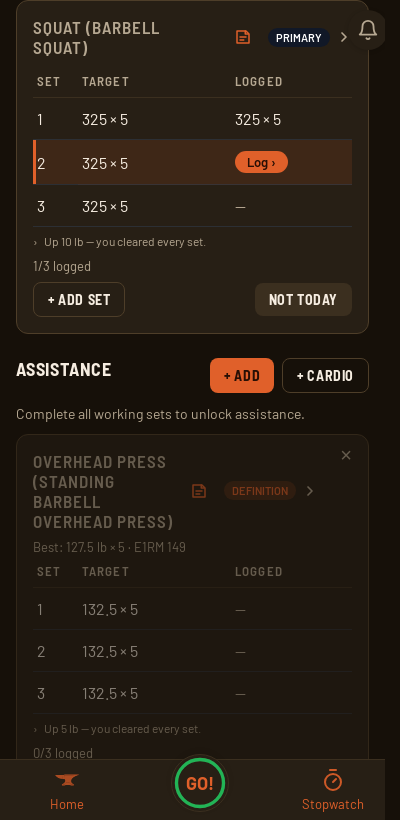
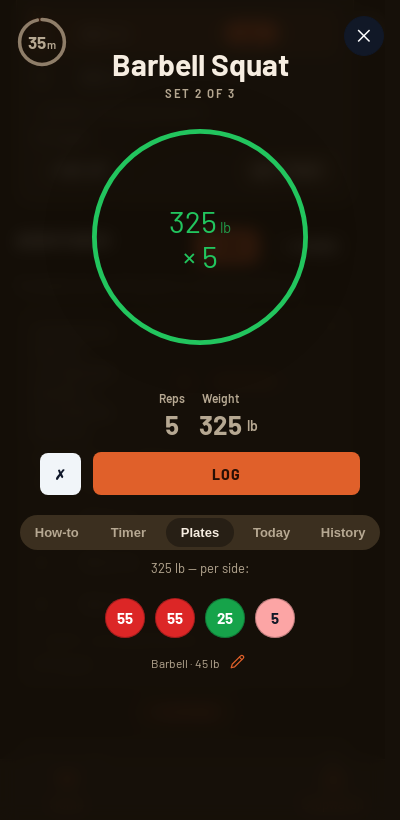
Starting Strength in Iron Forge
FAQ
- What weights should I start with?
Light enough to add weight for many weeks and to practise good form — for most people that means starting well below a true 5-rep max (often the empty or lightly-loaded bar on the upper-body lifts). Resist starting heavy; the programme is built on a long run of small increases.
- How fast does the weight increase?
Every session while you're completing your sets. Roughly +5 lb (2.5 kg) per session on squat/bench/press and +10–15 lb5–7.5 kg early on deadlift, tapering as you get stronger.
- Do I really squat every workout?
Yes — 3×5 squats every session, three times a week. Frequent squatting is central to the novice progression.
- What's the difference between Workout A and B?
A = Squat, Overhead Press, Deadlift. B = Squat, Bench Press, and a pull (Power Clean or Deadlift). You alternate A/B/A one week, B/A/B the next.
- What do I do when I stall?
Reset the stalled lift ~10% and build back up. If repeated resets stop working, you've maxed out novice linear progression — graduate to an intermediate template like the Texas Method.
- Do I need to do power cleans?
They're the programmed pull on Workout B, but if you can't learn them yet you can substitute another pull (e.g. rows) or use deadlift. Cleans train explosive pulling; they're valuable but not mandatory to progress.
- How important is eating?
Very. Novice LP only works if you recover between sessions, which means eating enough (especially protein) and sleeping. Under-eating is the most common reason a beginner stalls early.
Start Starting Strength for free today.
Real programs, done right. Log your lifts — Iron Forge handles the maths.