Proven program, faithfully implemented
Max-OT — Maximum Overload Training
Paul Delia's Max-OT is a heavy, short-session bodybuilding split for a lifter who has outgrown beginner programmes and wants size from maximum overload rather than volume — five days, one or two body parts each, 30 to 45 minutes, and 4 to 6 reps on the compound work. ⚠ This is the course's week-1 routine, the author's own entry point, not the whole of Max-OT: he publishes over 25 routines.
About the program
Created by: Paul Delia (AST Sports Science) — Max-OT — the free online course, AST Sports Science.
Who it's for
Max-OT is a METHOD, not a single programme. Delia's course goes on to publish "over 25 different Max-OT training routines as well as a complete 6-month Max-OT cycling program". What you have here is the routine he opens with — "a very effective Max-OT routine to get you accustomed to training the Max-OT way". Any of the later routines would have been a pick with no warrant behind it; this one is the author's own front door.
How it's built
The shape of the program — sessions, sets and rep scheme. Iron Forge fills in the exact weights for you from your maxes.
Max-OT
Legs
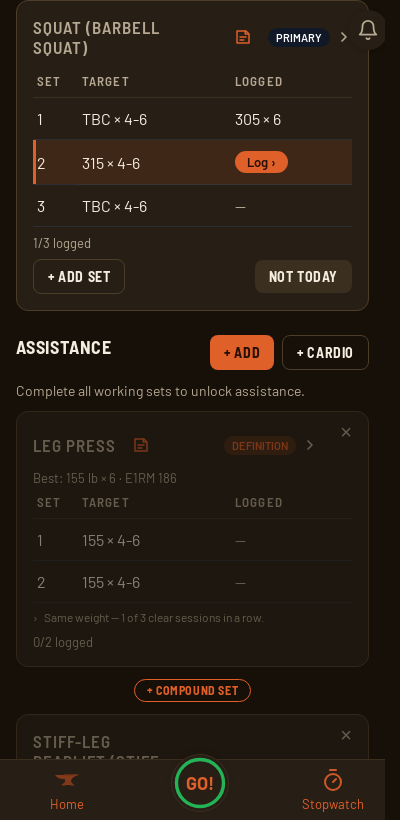
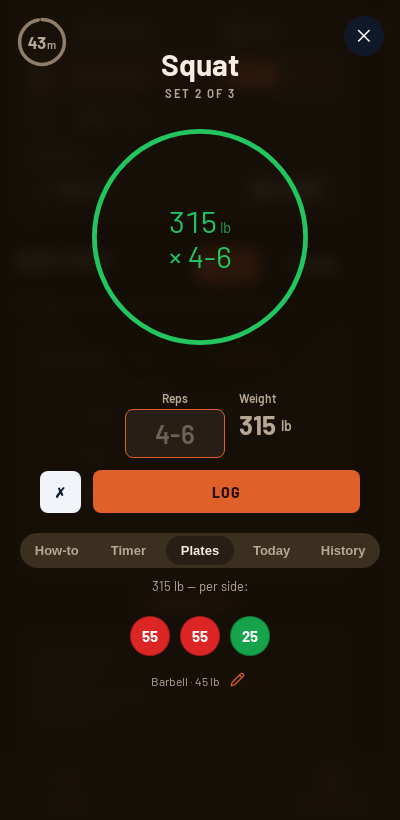
- Squat — 3×4-6
- + 4 more exercises
Arms and Abs
- Barbell Curl — 2×4-6
- + 10 more exercises
Shoulders and Traps
- Overhead Press — 3×4-6
- + 4 more exercises
Back
- Lat Pulldowns — 3×4-6
- + 3 more exercises
Chest
- Bench Press — 3×4-6
- + 2 more exercises
How Iron Forge runs it
How it works
Five days, one or two body parts each, and every muscle trained once every five to seven days. Sessions are short and heavy — 30 to 45 minutes, six to nine heavy sets per body part. The working range is 4 to 6 reps: warm up, then load each work set so that a sixth rep is not there.
When to add weight
Delia: "When I can get 6 reps consistently – 2 or 3 workouts in a row – then I increase the weight to an amount where I can only get 4 reps." The app takes the top of that range: hit 6 on an exercise three sessions running and it steps the weight up, putting you back at the bottom of the window. Clearing 6 once does not move it.
⚠ The abs and calves are not 4 to 6
The 4-6 window is for the heavy compound work. Delia's own table prescribes leg raises at 12-15, the crunches at 8-10, and both calf movements at 6-8 — so that is what you will see. A programme that applied the headline range everywhere would be contradicting the printed routine.
Why so few sets
Because every set is a heavy one. Max-OT's argument is that overload — not volume and not time under tension — is what makes a muscle adapt, so the session is built to let you be at your strongest for a small number of maximal sets and then leave. If your sessions are running past 45 minutes you are resting too long or doing too much.
Max-OT — Maximum Overload Training in Iron Forge
FAQ
- Why only 4 to 6 reps?
Because that is the load range Max-OT is built around: heavy enough to demand maximum overload on every work set. Delia's position is that overload drives adaptation, and that higher-rep work compromises the load you can use. The abs and calf work is the stated exception and runs at its own printed ranges.
- When exactly does the weight go up?
When you have hit 6 reps three workouts in a row on that exercise. Delia writes "2 or 3 workouts in a row"; the app uses 3, the conservative end, so the programme does not run faster than he published. One good session does not move the weight.
- Is this all of Max-OT?
No, and it does not pretend to be. Max-OT is a method that publishes over 25 routines plus a six-month cycling programme. This is the week-1 routine the course opens with, shipped as the author's own entry point.
- Why are the abs and calves on different rep ranges?
Because Delia prescribes them that way: leg raises 12-15, cable rope crunches and weighted crunches 8-10, both calf raises 6-8. It is his table, not our adjustment.
- Can I train fewer than five days?
Not without changing the programme. The split gives each muscle one heavy session every five to seven days, which is the recovery model the method rests on. Folding it into three days would make each session longer and less heavy — the opposite of what Max-OT is for.
- Should I warm up?
Yes — Max-OT expects you to work up to the heavy sets rather than start on them, and the prescribed sets are the WORK sets only. The programme leaves the warm-up to you, so pick whichever the app offers and ramp into the first heavy set of each exercise.
- The weights are blank when I start. Is that right?
Yes. Max-OT publishes a method and a routine, not starting loads — the correct weight is whatever puts you at the top of the rep window today. Log what you actually lift on the first pass and the programme progresses from there.
- Can I swap an exercise?
You can, but keep the movement pattern and keep it loadable in the 4-6 range. The routine is built from compound work you can add weight to; substituting a machine you cannot progressively overload removes the point of the programme.
- What if I stall?
Nothing happens automatically — the weight simply stays where it is until you clear 6 reps three sessions running. If an exercise sits there for a long time, look at your rest between sets and your sleep before you look at the programme.
Start Max-OT — Maximum Overload Training for free today.
Real programs, done right. Log your lifts — Iron Forge handles the maths.