Proven programme, faithfully implemented
Arnold's Golden Six
- Length
- Ongoing
- Days a week
- 3
- Kit
- Barbell
Arnold's Golden Six is the routine Schwarzenegger credits for his own foundation: one whole-body session, three days a week, and only six movements — squat, wide-grip bench, chin-ups, behind-the-neck press, barbell curl and sit-ups. Progression is judged on the last set only — thirteen reps or more and the weight goes up. ⚠ It never asks you to take weight off the bar, so there is no deload in it at all.
Who it's for
- Best for: Size, on a beginner's whole-body template — the source describes it as a routine that can be run indefinitely.
- Experience: Beginner. Six movements and one session to learn, though the behind-the-neck press asks for shoulder mobility not everyone has.
- Time: Three days a week, one session repeated. No fixed end date.
How it's built
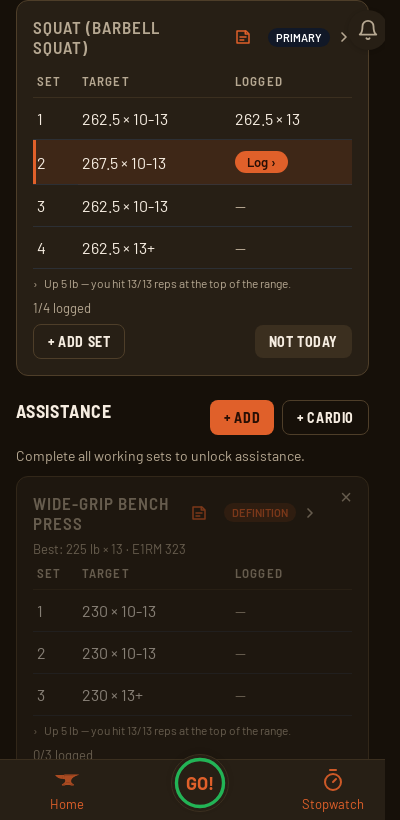
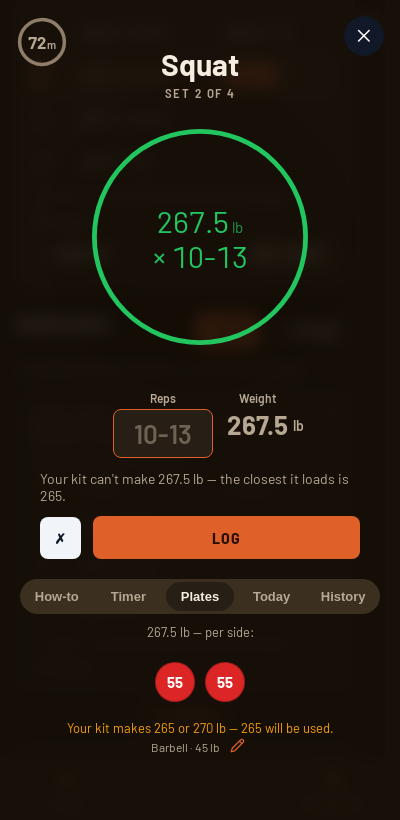
Open a day to see every exercise. Iron Forge keeps a working weight for each exercise and fills it in for you.
The Golden Six
Squat + 5 more
- Squat — 3×10–13, 1×10–13+
- Wide-Grip Bench Press — 2×10–13, 1×10–13+
- Chin-up — 3×1–13+
- Behind-the-Neck Press — 3×10–13, 1×10–13+
- Barbell Curl — 2×10–13, 1×10–13+
- Sit-Up — 3×1+
The Golden Six
Squat + 5 more
- Squat — 3×10–13, 1×10–13+
- Wide-Grip Bench Press — 2×10–13, 1×10–13+
- Chin-up — 3×1–13+
- Behind-the-Neck Press — 3×10–13, 1×10–13+
- Barbell Curl — 2×10–13, 1×10–13+
- Sit-Up — 3×1+
The Golden Six
Squat + 5 more
- Squat — 3×10–13, 1×10–13+
- Wide-Grip Bench Press — 2×10–13, 1×10–13+
- Chin-up — 3×1–13+
- Behind-the-Neck Press — 3×10–13, 1×10–13+
- Barbell Curl — 2×10–13, 1×10–13+
- Sit-Up — 3×1+
How Iron Forge runs it
How it works
Arnold Schwarzenegger's Golden Six: one whole-body session, three days a week, six movements — squat, wide-grip bench, chin-ups, behind-the-neck press, barbell curl and bent-knee sit-ups. The source describes it as a beginner routine "that can be run indefinitely".
Progression
On the LAST set of a movement, if you get 13 or more reps, add weight — 5 lb2.5 kg. Below that, keep the weight the same next session.
If you miss
Nothing happens: you repeat the weight. ⚠ The routine never asks you to take weight off the bar, so there is no deload here — that is the source's choice, not an omission.
Questions
Why is the last set an AMRAP?
It is the progression test. The source: "If you're contemplating whether or not to add weight to a given lift, perform an AMRAP set on the last set of that movement. If you can get 13+ reps on that set, then add weight."
What if I get 12 reps?
You keep the same weight next session. The threshold is 13, and below it the instruction is explicit: "keep the weight the same for the next session".
Why behind-the-neck press?
It is what the routine prescribes. If your shoulders dislike it, swap the slot — but know that you are departing from the source at that point.
Why do chin-ups get heavier when sit-ups don't?
Sit-ups are bodyweight work: log the reps, and the reps climbing over the weeks is the progress. Chin-ups start at bodyweight too, but once a set reaches thirteen reps, the next session adds 5 lb2.5 kg, as a weighted chin-up. That is an addition to the routine, which gives chin-ups no rep number of its own.
Is there a deload or a reset?
No. The routine has no stall policy at all — you simply repeat the weight until you clear 13 reps on the last set.
How many days a week?
Three, on non-consecutive days. It is one session repeated, not a split.
The table says ten reps. Why does the app show 10–13?
Because the routine's own progression rule makes thirteen the number that matters: ten is where the lift is worked, thirteen is where the weight goes up. Written as a flat ten there would be nothing for the progression to measure, so the range carries both halves of the same instruction.
What do the targets on chin-ups and sit-ups mean?
Both are as many reps as you can. Sit-ups have no number attached and none has been invented, so log what you actually did. Chin-ups count towards thirteen: reach it on any set and the next session adds 5 lb2.5 kg; fewer keeps the weight the same.
How long can I run it?
As long as it keeps working — the source describes it as a beginner routine that can be run indefinitely, and there is no deload or reset to schedule around. It is set up for twelve weeks here. When a couple of lifts have gone months without clearing thirteen reps, that is the sign to move to something with more structure.
Arnold's Golden Six in Iron Forge
Ready to run The Golden Six?
Log your lifts. Iron Forge handles the maths.